
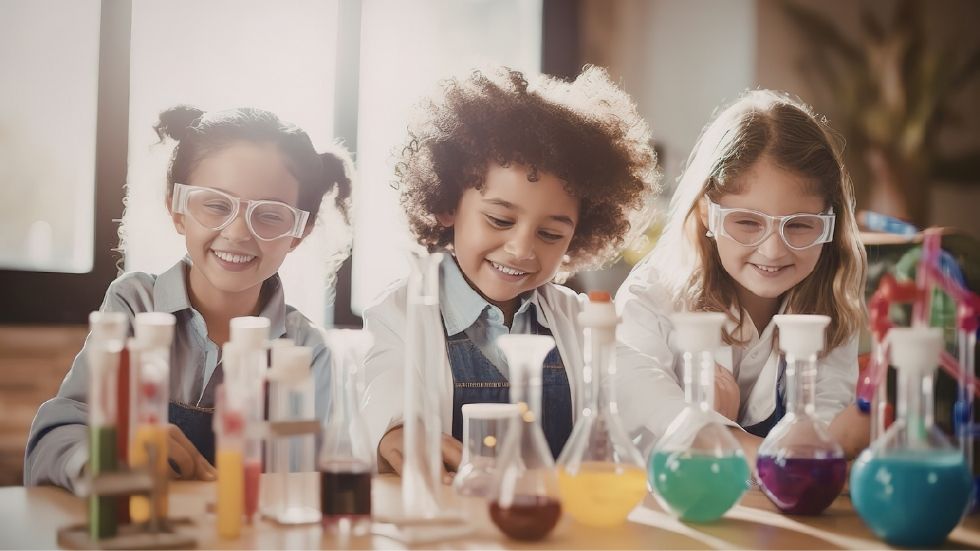
Science is rarely a subject that thrives in the quiet corners of a textbook. While theories provide the map, it is the laboratory that offers the journey. For students in schools and colleges, the transition from reading about a chemical reaction to seeing it bubble, or from studying laws of motion to measuring them with a precision timer, is where true understanding begins.
Providing a complete science solution is about more than just filling a room with glass and metal; it is about creating an environment where curiosity is safe, encouraged, and accurately measured.
The Role of Precision in the Learning Process
In the early stages of education, the primary goal of a science lab is to spark wonder. However, as students progress into higher education and specialized colleges, the focus shifts toward precision and methodology. This is where the quality of Educational Lab Equipment becomes a critical factor in the pedagogical process.
When a student uses a microscope that offers a clear, high-resolution view of a plant cell, or a digital balance that provides an unfaltering measurement, they develop trust in the scientific method. Low-quality equipment often leads to “failed” experiments—not because the student’s logic was flawed, but because the tool was inadequate. By investing in reliable instruments, institutions ensure that the only variables in an experiment are the ones the students are meant to test.
Essentials of a Modern School Science Lab
A well-equipped school lab serves as a multi-disciplinary hub. Whether it is Physics, Chemistry, or Biology, the equipment must be robust enough to handle frequent use by enthusiastic beginners while being accurate enough to demonstrate core principles.
1. Physics: Mechanics and Optics
Physics is the study of how the world moves and holds together. Equipment like friction blocks, pulleys, and inclined planes allow students to feel the forces they calculate on paper. In the realm of optics, high-quality prisms, lenses, and laser kits are essential for visualizing how light bends and behaves—concepts that are often difficult to grasp through 2D diagrams alone.
2. Chemistry: Safety and Reaction
The chemistry lab is often a student’s favorite because of its tactile nature. Beyond the essential beakers, flasks, and test tubes, a complete solution includes proper heating elements like Bunsen burners or hot plates, and safety gear that ensures a secure learning environment. Modern chemistry education also leans heavily on understanding molecular structures, making high-quality modeling kits a staple for any classroom.
3. Biology: Exploring Life
Biology labs bridge the gap between the macro world we see and the micro world that sustains us. From anatomical models that can be deconstructed to understand human systems to prepared slides that reveal the intricacies of microbiology, these tools make the “invisible” visible.
Transitioning to Advanced College Solutions
As students move into college, the requirements for Educational Lab Equipment evolve. The experiments become more complex, requiring higher sensitivity and often the integration of digital data collection.
At this level, “complete science solutions” mean providing specialized apparatus for electronics, thermodynamics, and advanced biotechnology. This might include oscilloscopes for analyzing electrical signals or spectrophotometers for chemical analysis. The goal here is to prepare students for professional environments—whether that be in research, medicine, or engineering—by familiarizing them with the standards of the industry.
Why Quality Matters Beyond the Classroom
The impact of high-quality lab equipment extends far beyond the grades on a lab report. There are three key areas where the right tools make a lasting difference:
- Critical Thinking: When equipment works correctly, students can focus on analyzing data rather than troubleshooting broken tools. This fosters a mindset of inquiry and logical deduction.
- Safety: Reliable equipment is inherently safer. Whether it’s stable glassware that doesn’t crack under heat or electrical components that are properly insulated, quality is the first line of defense in a classroom.
- Inspiration: There is a certain dignity in a well-equipped lab. It signals to the student that their education is a serious and valued endeavor. It turns a “classroom” into a “research center,” inspiring the next generation of scientists and innovators.
Finding a Partner in Science Education
Building or upgrading a laboratory is a significant undertaking for any educational institution. It requires a balance between budget, space, and the specific curriculum needs of the students. A “complete solution” is not a one-size-fits-all kit; it is a curated selection of tools designed to grow with the learners.
For institutions looking to bridge the gap between theoretical concepts and hands-on mastery, finding a provider that understands the nuances of educational environments is key. Precision, durability, and support are the hallmarks of a great equipment partner.
If you are looking to enhance your institution’s scientific capabilities, explore the comprehensive range of solutions available at Indosawedu. From foundational school kits to advanced collegiate apparatus, the right tools are the first step toward a lifetime of discovery.
Conclusion
The laboratory is the heart of science education. It is the place where a student stops being a passive observer and becomes an active participant in the quest for knowledge. By providing high-quality Educational Lab Equipment, we aren’t just teaching facts; we are providing the keys to unlock the mysteries of the physical world.
Whether it is the first time a child sees a heartbeat under a monitor or a college senior finishing a complex thesis on electromagnetism, the equipment is the silent partner in every breakthrough. Let’s ensure our students have the very best tools for the job.

 – Products